Council
What each member of Council has put forward, from the published minutes. Listed alphabetically within each office — there is no ranking here, because no honest single measure of a councillor exists.
Partial record. Covers 113 of 119 meetings (2022-10-27 to 2026-07-30). Counts below are of what has been parsed, not of the whole term — the remaining 6 meetings have no published minutes yet or failed to parse.
A Town Councillor sits on Milton Council only, so for these four members the record below is their whole council role.
| Member | Attended | Own notices | Motions moved | Seconded | Recorded votes |
|---|---|---|---|---|---|
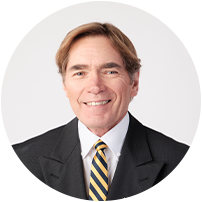 John Challinor II John Challinor IIWard 2 | 57 of 57 (100%) | 16 | 100 | 73 | 10 for · 8 against |
 Adil Khalqi Adil KhalqiWard 3 | 43 of 57 (75%) | 10 | 56 | 25 | 15 for · 3 against |
 Sarah Marshall Sarah MarshallWard 4 | 52 of 57 (91%) | 2 | 7 | 27 | 16 for · 2 against |
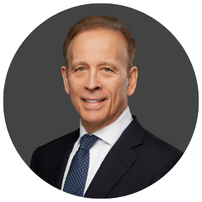 George Minakakis George MinakakisWard 1 | 10 of 12 (83%) | 2 | 9 | 3 | 4 for · 1 against |
| Kristina Tesser Derksen Ward 1 | 35 of 37 (95%) | 5 | 10 | 4 | 5 for · 0 against |
This is a partial record for these members. They sit on both Milton Council and Halton Regional Council — where water, wastewater, waste and the regional roads are decided. Only Milton Council business is covered here, so roughly half of what they do is invisible on this site. Their figures should not be read against the Town Councillors above.
| Member | Attended | Own notices | Motions moved | Seconded | Recorded votes |
|---|---|---|---|---|---|
 Sameera Ali Sameera AliWard 4 | 55 of 57 (96%) | 12 | 49 | 33 | 17 for · 1 against |
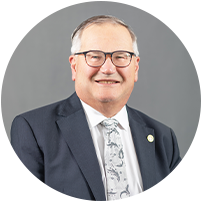 Colin Best Colin BestWard 1 | 56 of 57 (98%) | 1 | 94 | 96 | 14 for · 4 against |
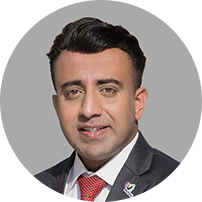 Sammy Ijaz Sammy IjazWard 3 | 56 of 57 (98%) | 0 | 12 | 32 | 14 for · 3 against |
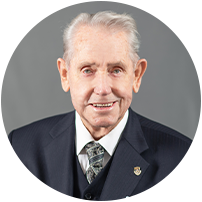 Gordon A. Krantz Gordon A. KrantzTown-wide | 55 of 57 (96%) | 1 | — | 0 | 11 for · 7 against |
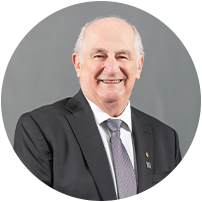 Rick Malboeuf Rick MalboeufWard 2 | 55 of 57 (96%) | 0 | 91 | 135 | 10 for · 6 against |
They measure different things and are not interchangeable. A notice of motion is a member putting their own item on the agenda — the clearest signal of initiative. Moving a motion usually means sponsoring a staff report's recommendation onto the floor. Seconding puts a motion up for debate and is often a seat convention. Counts are substantive only.
Recorded votes are rare and unrepresentative. Individual positions exist for 18 of 576 resolutions — about 3% — because Ontario law records names only when a member asks. Members ask on the most contentious items, so this is a deliberately skewed sample and says nothing about the other 97%.